Preparation
Preparation (we call it "Prep" or "Prepping")
makes the difference between an "ordinary" paint job and a
meticulous, discriminating job.
Prepping often takes several times longer that the actual
painting itself.
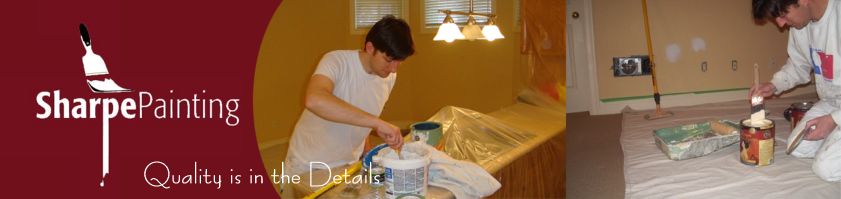
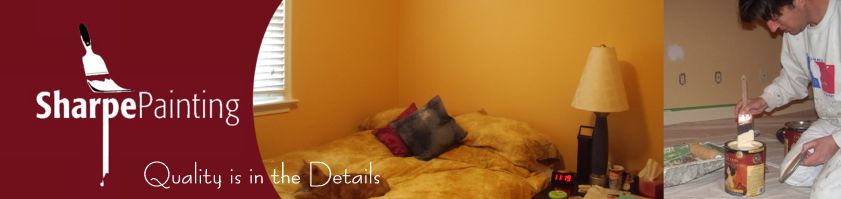
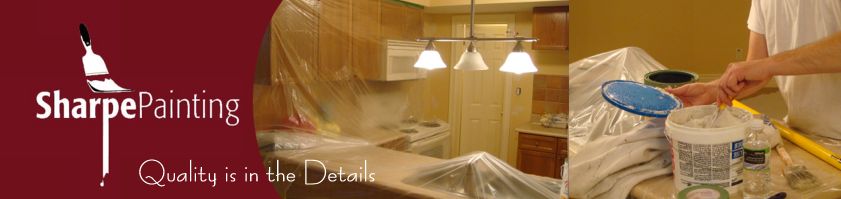
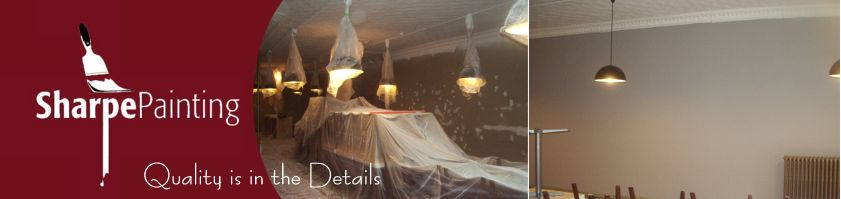
The first step in preparation is to protect all items that will
not be painted, such as furniture, sinks, taps, counters. plumbing
fixtures, carpets, hardwood, chandeliers, ceiling fans, exotic
moldings. We use appropriate drop cloths and plastic film,
securely taped in place.
Prep
then involves smoothing of the surfaces to be painted, removing old
lumps and paint runs, repairing cracks, and removing picture hangers
and various wallboard-plugs and then filling the holes.
Prepping also may include primer application; unpainted surfaces
generally require a coat of primer to seal the pores and stop the
wall materials from absorbing excessive paint and causing a blotchy
finish. Similarly, if covering a previous dark wall with a new
light colour, inexpensive primer is the choice to reduce the number
of coats (and cost) required to cover the previous colour.
In some cases, we may even need to repair or replace damaged trim
that would detract from the finished product.
Prepping also involves removing various pieces of hardware, such
as door handles, electrical cover plates, light fixtures and mirrors
so that paint over-spray does not detract from their
appearance. Although a "quick job" is possible by
not removing these items and simply brush-trimming or masking around
them, this does not normally meet our quality of work standards
since the brush marks will almost always be obvious to the keen eye.
|